

Introduction: Minimalism Isn’t About Having Less — It’s About Choosing Better
A minimalist wardrobe is not about owning only a few pieces. It’s about creating a collection of clothing that you love, that fits your lifestyle, and that makes getting dressed easy every single day. Many people think building a minimalist wardrobe is expensive — but the truth is the opposite. When you focus on quality, simplicity, and versatility, you actually save money, avoid impulse buying, and enjoy a clutter-free closet.
Here’s a step-by-step guide to help you build a stylish minimalist wardrobe without overspending.
✅ 1. Start With a Closet Cleanout
Before buying anything new, begin by understanding what you already own. A cleanout helps you identify:
- What you wear often
- What you never touch
- What no longer fits
- What doesn’t match your style anymore
Sort your clothes into four piles: Keep, Donate, Sell, and Recycle.
This step creates a blank canvas and prevents you from repurchasing similar items. Plus, selling old items gives you extra money to invest in your new wardrobe.
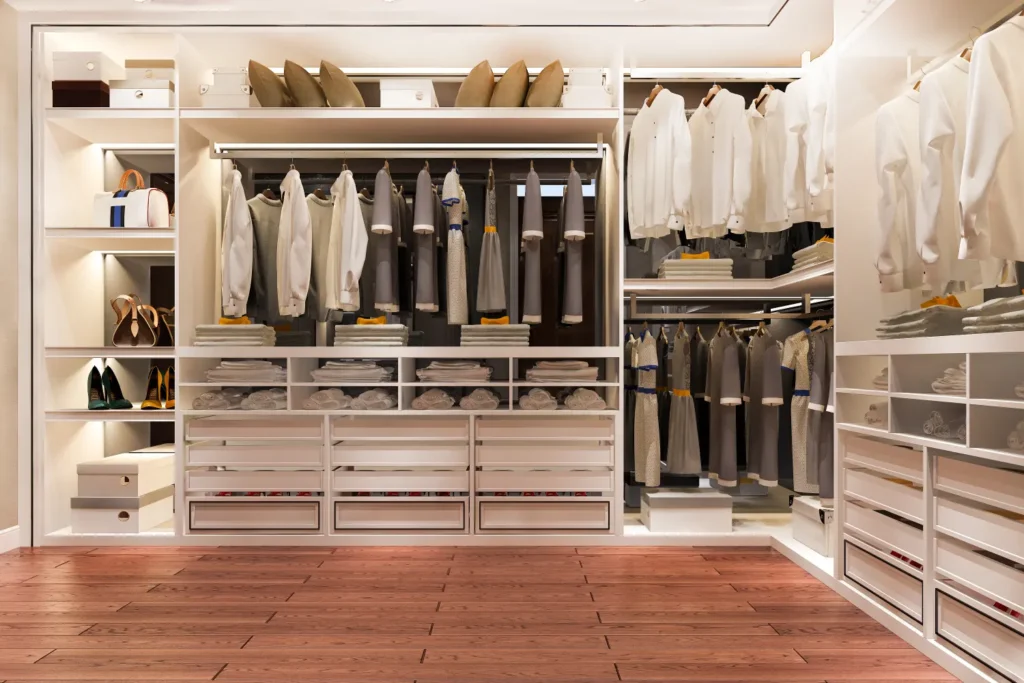
✅ 2. Define Your Personal Style (Your “Minimalist Identity”)
Minimalism is different for everyone. Some prefer a soft neutral look; others love clean lines and monochrome outfits.
Ask yourself:
- What colors make me feel confident?
- What outfits do I repeat the most?
- What clothing style fits my daily life?
Your answers will guide every purchase. When you define your style, your wardrobe becomes more intentional — not random.
Examples of minimalist style identities:
- Neutral and soft (beige, cream, white)
- Modern and monochrome (black, grey, white)
- Relaxed casual (denim, cotton, simple layers)
- Clean professional (blazers, trousers, classic shirts)

✅ 3. Choose a Simple Color Palette
A minimalist wardrobe works because everything mixes and matches effortlessly. The easiest way to achieve this is by selecting a small color palette.
Most minimalist palettes include:
- Neutrals: black, white, beige, grey, navy
- One or two accent colors: olive, brown, soft blue, blush
This approach makes your wardrobe look cohesive and elegant without spending money on tons of clothes.

✅ 4. Invest in Essential Basics First
Building a minimalist wardrobe doesn’t require buying everything at once. Start with essential basics that form the foundation of your outfits.
Core items include:
- A good-quality white and black T-shirt
- A neutral sweater
- Straight-leg jeans
- A black or beige blazer
- A simple button-down shirt
- Comfortable neutral sneakers
- A pair of classic trousers
- A versatile dress
You can style each of these items in dozens of ways, making them the perfect starting point when working with a budget.
✅ 5. Choose Quality Over Quantity — Even on a Budget
Minimalist wardrobes last longer because they focus on quality, not impulse purchases.
Look for indicators of good quality:
- Thick fabric that holds shape
- Proper stitching
- Neutral colors that stay in style
- Wrinkle-resistant materials
- Clothing that washes well
Buying fewer but better pieces saves money in the long run since you won’t need to replace items frequently.
Tip: Many high-quality items can be found at outlets, discount stores, or seasonal sales.
✅ 6. Shop Second-Hand and Thrift Stores
Thrifting is one of the best ways to build a minimalist wardrobe without overspending. You can find:
- Blazers
- Coats
- Jeans
- Dresses
- High-quality basics
- Even designer pieces
All for a fraction of the price.
Bonus: Thrift stores often have neutral, timeless clothing perfect for minimalist style.
Apps and platforms like Poshmark, Depop, or Facebook Marketplace make it even easier to shop second-hand from home.
✅ 7. Build a Capsule Wardrobe (Mix-and-Match System)
A capsule wardrobe is a small collection of versatile pieces that match with everything. Most capsules contain around 20–30 items that can create 60–100 outfits.
To build yours:
- Choose 5 tops
- Choose 4 bottoms
- Add 2–3 layering pieces
- Include 2 pairs of shoes
- Add 1–2 dresses if needed
Because everything coordinates, you can create multiple stylish looks without constantly buying more clothes.
✅ 8. Follow the “One In, One Out” Rule
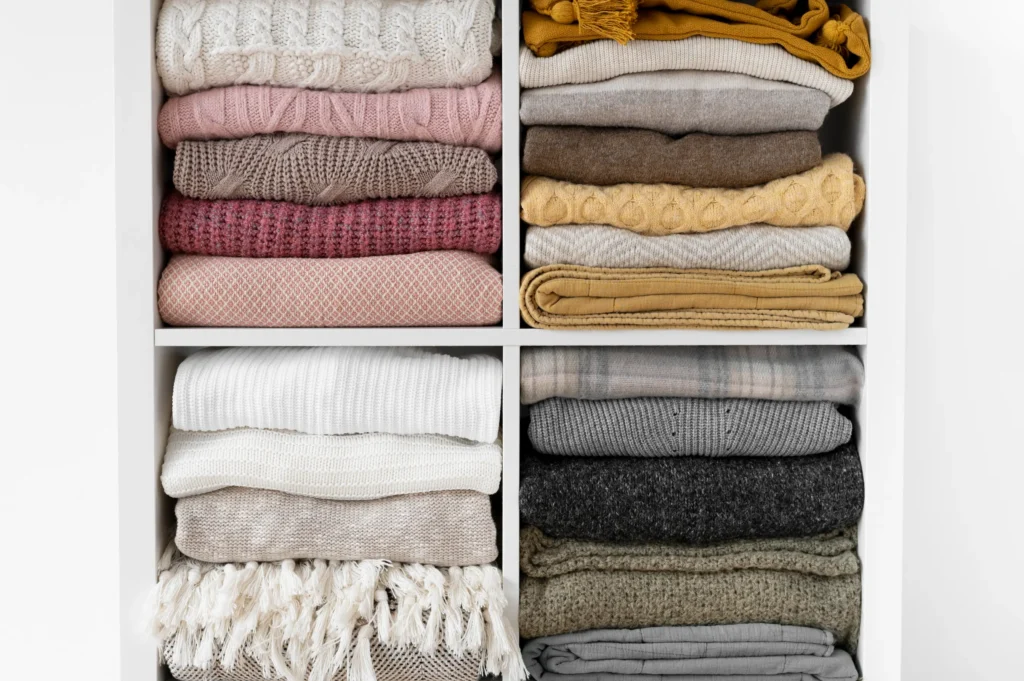
Minimalists avoid clutter by following a simple rule:
When you buy one new item, remove one old item.
This method keeps your wardrobe manageable and prevents unnecessary shopping.
It also forces you to think before buying something new — reducing impulse purchases and saving money.
✅ 9. Avoid Trend Shopping — Stick to Timeless Pieces
Trends change every month, and buying trendy items leads to wasted money and closet clutter. Instead, focus on timeless, classic styles.
Timeless pieces include:
- Blazers
- Neutral sweaters
- Straight jeans
- Minimalist handbags
- White sneakers
- Classic coats
These items never go out of style and stay relevant for years.
✅ 10. Learn to Style One Item in Multiple Ways
A minimalist wardrobe shines when each piece can be styled in several outfits. This gives you maximum value for your money.
Example:
A white shirt can be worn:
- With jeans for casual days
- Under a blazer for work
- Over a dress for layering
- Tucked into trousers for a polished look
When you learn to re-style your pieces, you reduce the desire to buy new clothes.
⭐ Conclusion: Minimalism Makes Style Easier, Cheaper, and More Confident
Building a minimalist wardrobe on a budget isn’t difficult — it just requires intention. By focusing on essential pieces, neutral colors, second-hand finds, and timeless designs, you create a wardrobe that is stylish, functional, and affordable.
A minimalist wardrobe saves you money, saves you time, and helps you feel confident every day without stress. You don’t need more clothes — you need the right clothes.
Start with one small step today, and watch your closet transform into something simple, elegant, and completely you.